

There is a reason merino has been the first layer humans reach for in cold weather — and the same reason it works beautifully for dogs. Unlike synthetic fibres that simply trap heat, merino wool actively regulates temperature. It warms when it is chilly and breathes when the afternoon warms up, which is exactly what a dog needs on a cool Melbourne morning walk that turns into a sunny afternoon in the yard.
This guide walks you through why a merino wool dog sweater outperforms most alternatives, how to get the right fit, and the care routine that keeps one in rotation for years rather than a single season.
Why Merino Wool Works for Dogs
Merino fibres are finer than regular wool — typically around 17–24 microns — which makes them soft against the skin rather than itchy. That matters for a dog wearing a garment for hours at a time. The fibre also absorbs moisture vapour (from exertion or a light drizzle) and releases it into the air, so a dog does not sit in a damp layer after a brisk walk.
The temperature regulation is the real advantage. A synthetic fleece traps whatever heat the dog produces, which is fine at zero degrees but too much at twelve. Merino adjusts. It keeps a dog comfortable across a wider range of conditions, which suits Australian weather where a single outing can span both ends of the scale.
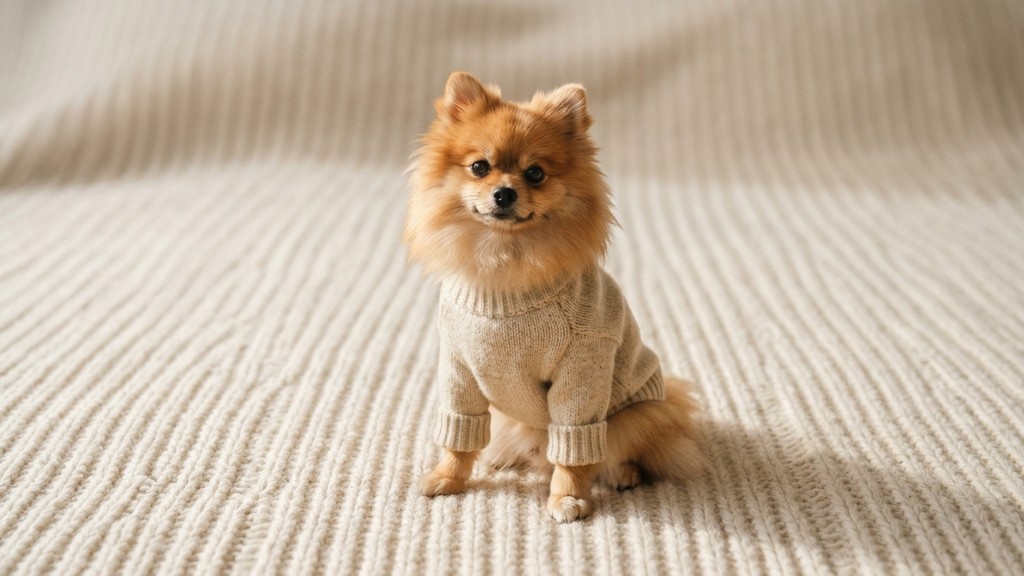
What to Look for in a Merino Dog Sweater
Not all merino dog sweaters are built the same. A few design details separate one that works from one that ends up balled up in the laundry:
Ribbed neck and cuffs. These keep the sweater in place without pulling fur. A sweater that rides up or slides sideways is one a dog learns to hate.
Belly cut-away. Male dogs need room to relieve themselves without the garment catching. A sweater cut cleanly at the belly solves this without compromising coverage elsewhere.
Leash opening at the back. A slot or reinforced hole for a harness leash means the sweater sits comfortably under or over a harness without bunching.
Machine washability. Merino can be delicate, but a well-constructed merino dog sweater should withstand a gentle machine wash. Hand-washing every time is not realistic for most pet parents — and a garment that cannot be cleaned easily is one that gets left in the drawer.
How to Size a Dog Sweater Correctly
The most common reason a dog sweater fails is fit. Too tight and it restricts movement; too loose and it catches on everything.
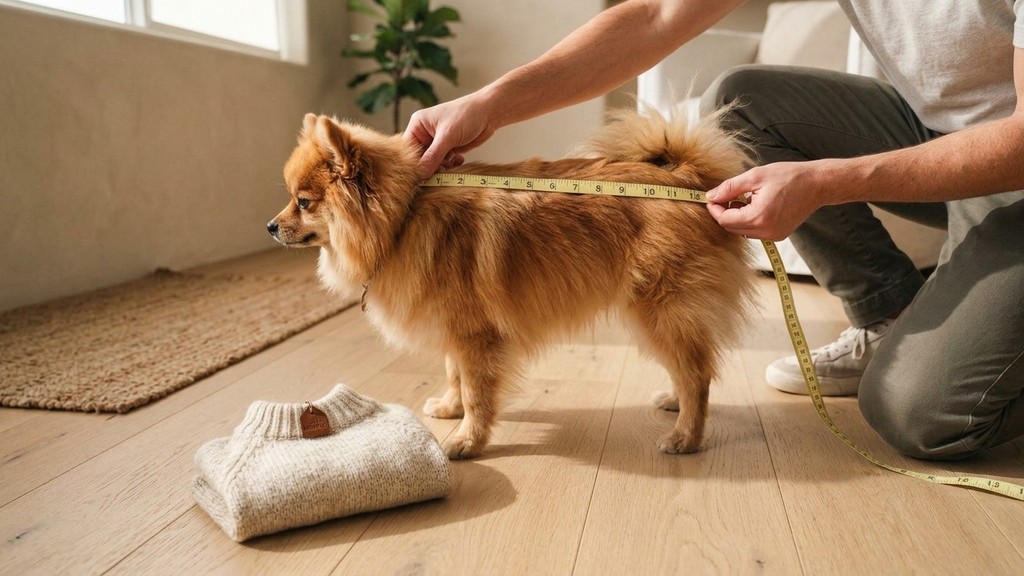
The measurement that matters is back length — from the base of the neck (where a collar sits) to the base of the tail. Most size charts use this as the primary dimension:
- XS: back 20–25 cm (small breeds like Cavaliers, French Bulldogs)
- S: back 26–33 cm (border terriers, miniatures)
- M: back 34–42 cm (beagles, medium spaniels)
- L: back 43–52 cm (larger spaniels, kelpies)
Measure your dog standing, with a soft tape measure along the spine. If your dog falls between sizes, the larger size is usually the safer choice — a sweater with a little room is more comfortable than one that stretches.
Caring for Merino Wool Dog Clothing
Merino is durable when treated well. The care routine is straightforward:
- Machine wash on a gentle or wool cycle with cool water (30°C or below).
- Use a wool-specific detergent — standard biological detergents break down the fibre over time.
- Do not tumble dry. Lay flat to dry on a towel, reshaping while damp.
- Store folded, not hung. Hanging stretches the knit over time.
A merino wool dog sweater cared for this way holds its shape and softness through many seasons. It is one of the reasons natural fibre clothing rewards the initial investment — a synthetic alternative that pills and loses shape after a handful of washes costs more per wear in the long run, even if the upfront price is lower.
Who a Merino Dog Sweater Is For
A merino wool dog sweater suits dogs who spend time outdoors in cooler months — morning walks, evening yard time, camping trips — and dogs who spend time indoors in air-conditioning. The temperature regulation works in both directions.
It is particularly well-suited to:
- Short-coated breeds who lose heat quickly (greyhounds, whippets, boxers)
- Small breeds with less body mass to retain warmth (chihuahuas, miniature dachshunds)
- Senior dogs whose joints benefit from consistent warmth
- Dogs with thin or clipped coats in winter
It is less necessary for thick-coated northern breeds in mild climates — though even a husky appreciates a layer on a genuinely cold night.
The Merino Wool Dog Sweater
Shop the Merino Wool Dog Sweater
Knitted from 100% fine merino, this sweater is built around the details that matter: ribbed neck and cuffs, a belly cut-away for males, and a leash opening at the back for a harness. Machine washable on a gentle cycle, it comes in four sizes from XS to L to fit dogs with a back length from 20 cm to 52 cm.
It is a simple piece of dog clothing made from a material that genuinely performs — warm when it needs to be, breathable when it does not, and soft enough that a dog forgets it is there.